

The Core Technique: Dry vs. Wet
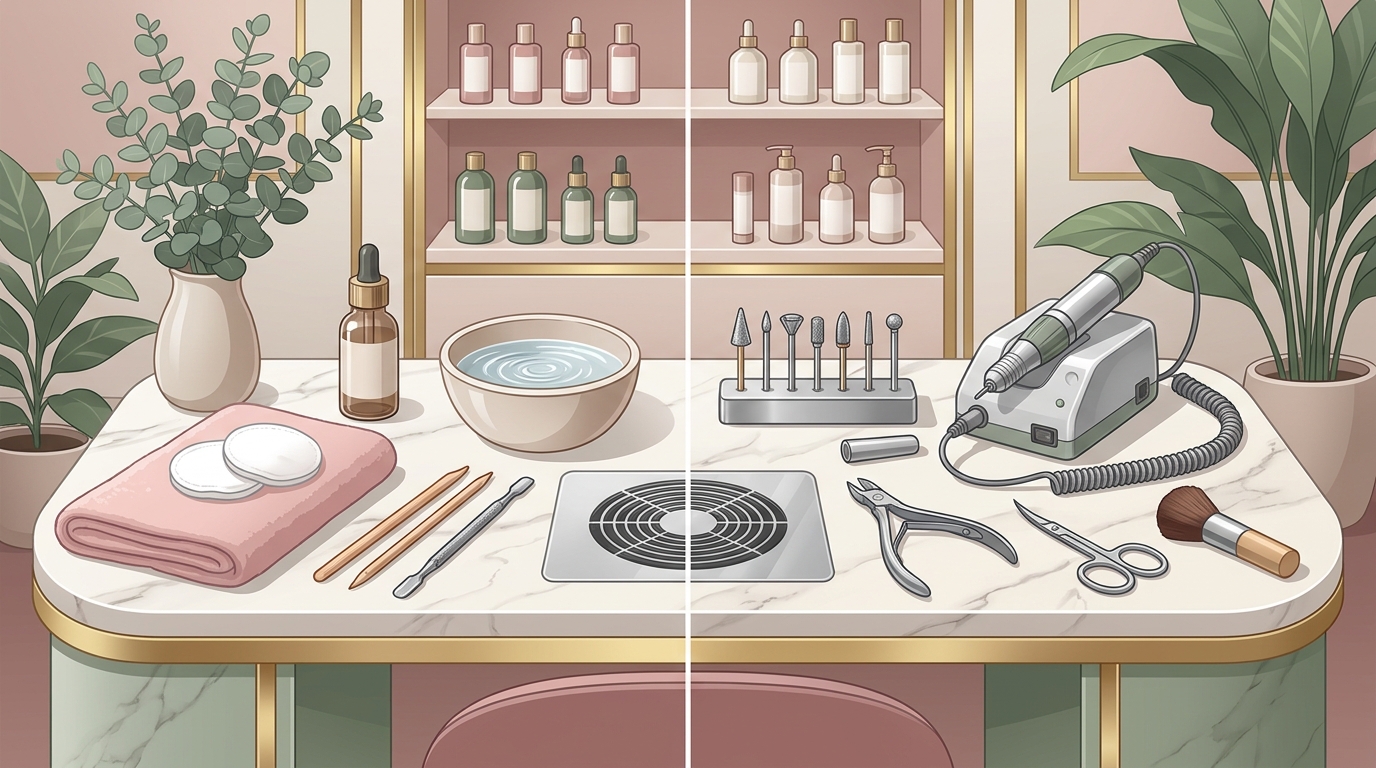
The fundamental difference lies in how the cuticle is treated. A standard gel manicure often involves soaking the hands in water or using a liquid remover to soften the cuticle before pushing it back. This is known as a wet method. In contrast, a Russian manicure is a dry technique that utilizes a specific e-file bit to gently remove dead skin and cuticle tissue without moisture. This approach allows for a more precise and controlled removal of the cuticle, which is critical for a clean application.
Why Dry Matters
Moisture can interfere with the adhesion of gel products to the natural nail plate. By keeping the nail dry, the technician can ensure that the gel bonds directly to the keratin of the nail. This reduces the risk of lifting and peeling at the cuticle line, which is a common issue with wet methods. The dry environment also allows the technician to see exactly where the live skin ends and the dead skin begins, minimizing the risk of irritation.
Equipment and Precision
Regular gel manicures typically rely on manual tools such as a metal pusher and a small orange stick. While effective for many, these tools can sometimes be less precise for clients with thick or stubborn cuticles. A Russian manicure employs a professional-grade electric file, or e-file, with diamond-coated bits. These bits are designed to rotate at high speeds to buff away dead skin with minimal effort. The precision of the e-file allows the technician to sculpt the cuticle line into a perfect, clean arc.
Sanitation and Safety
Because the e-file is a shared tool, strict sanitation protocols are essential. At Lilian and Jane, we adhere to rigorous hygiene standards to ensure that every bit is sterilized between clients. This level of care is non-negotiable in a dry technique where the tool comes into close contact with the nail bed. The use of specialized bits also reduces the physical strain on the technician, allowing for a more consistent and gentle application across all ten nails.
Finish and Longevity
The visual result of a Russian manicure is often described as a "glass-like" finish. Because the cuticle is removed rather than pushed back, the gel can be applied right up to the skin line without creating a thick ridge. This creates a seamless transition between the nail and the skin. In a regular gel manicure, the pushed-back cuticle can sometimes create a slight bump or unevenness that is visible under certain lighting. The Russian method eliminates this, resulting in a smoother surface that feels as good as it looks.
Duration of Wear
Longevity is a major advantage of the Russian technique. Since the gel is applied to a perfectly prepped, dry nail plate, it tends to last longer without lifting. Clients often report that their Russian gel manicures remain intact for three to four weeks, whereas a standard gel manicure might start to lift at the cuticle after two weeks. This extended wear time makes the Russian manicure a cost-effective choice for those who want to minimize salon visits. The durability is a direct result of the superior preparation and application process.
Who Is the Russian Manicure For?
While the Russian manicure is suitable for most clients, it is particularly beneficial for those with specific nail conditions. Individuals with thick, overgrown, or stubborn cuticles often find that wet methods do not provide a clean enough finish. The dry filing technique addresses these issues effectively. It is also ideal for clients who are sensitive to the sensation of wet tools or who prefer a more thorough cleaning of the nail area. However, it is important to note that this technique requires a skilled technician. Improper use of an e-file can damage the nail plate or surrounding skin, so choosing an experienced professional is crucial.
Client Comfort and Experience
The experience of a Russian manicure is distinct from a standard gel service. The process is generally quieter and more focused, as the technician works meticulously on each nail. Clients often appreciate the attention to detail and the final result. At Lilian and Jane Boutique Spa, we ensure that the environment is relaxing and that the process is as comfortable as possible. The combination of skilled technique and a premium setting makes this service a favorite among our discerning clients in Manhattan.
Key Takeaways
- Dry vs. Wet: Russian manicures use a dry e-file technique, while regular gel manicures typically use wet cuticle removal.
- Precision: The use of specialized e-file bits allows for a cleaner, more precise cuticle line.
- Adhesion: Dry preparation improves gel adhesion, reducing the risk of lifting and peeling.
- Finish: The Russian method creates a smoother, glass-like finish that is visually superior.
- Longevity: Russian gel manicures often last longer, typically three to four weeks, due to better prep.
- Expertise: This technique requires a highly skilled technician to ensure safety and optimal results.
Frequently Asked Questions
Is a Russian manicure painful?
When performed correctly by a skilled technician, a Russian manicure should not be painful. The e-file is used gently to remove only dead skin. If you feel any discomfort, inform your technician immediately so they can adjust their technique or pressure. Proper training ensures that the tool is used safely and comfortably.
How long does a Russian gel manicure last?
A Russian gel manicure typically lasts between three and four weeks. The dry preparation method allows the gel to bond more effectively to the natural nail, which extends the wear time. Regular maintenance of the cuticle and avoiding excessive exposure to harsh chemicals can help maintain the integrity of the manicure.
Can I get a Russian manicure if I have sensitive skin?
Yes, but it is important to communicate your sensitivity to your technician. The dry technique is often gentler on the skin than wet methods that involve soaking. However, if you have any active skin conditions or open wounds, it is best to consult with a medical professional before proceeding with any nail service.
What is the difference in cost between Russian and regular gel manicures?
Russian manicures are generally more expensive than regular gel manicures due to the additional time, specialized equipment, and skill required. The higher cost reflects the precision and longevity of the service.
Do I need to do anything special to prepare for a Russian manicure?
No special preparation is required on your part. Simply arrive with clean, dry hands. It is helpful to avoid applying lotions or oils to your hands immediately before the appointment, as this can interfere with the adhesion of the gel. Your technician will handle all the necessary preparation during the service.
Is the Russian technique safe for natural nails?
When performed by a trained professional, the Russian technique is safe for natural nails. The key is to use the correct bits and to avoid over-filing the nail plate. Over-filing can thin the nail, so it is important to trust an experienced technician who understands the limits of the natural nail structure.
How often should I get a Russian manicure?
Most clients schedule Russian manicures every three to four weeks. This aligns with the natural growth cycle of the nail and the typical wear time of the gel. Regular appointments help maintain the health and appearance of your nails while ensuring that the cuticle is kept neat and tidy. Learn more: Russian gel Manicure HydraFacial.