
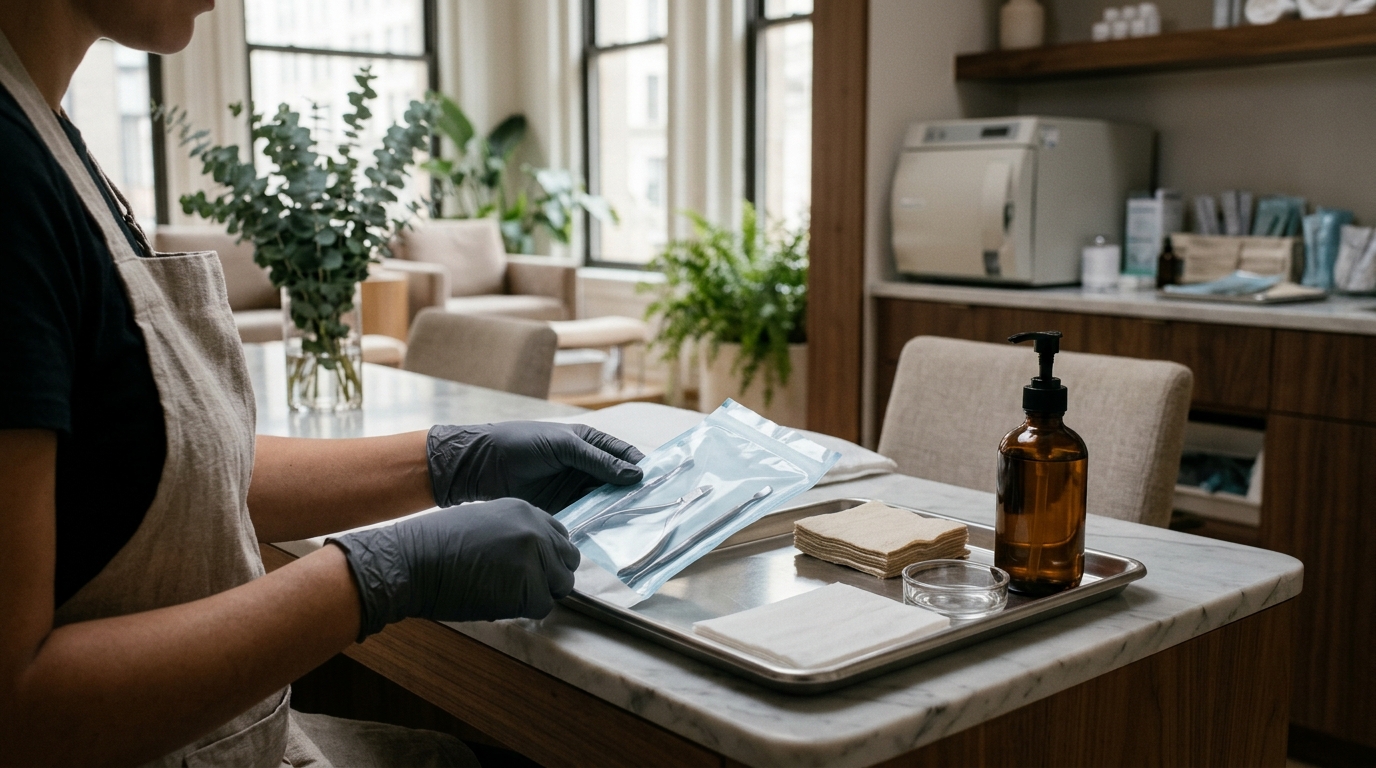
Choosing a safe nail salon in New York City requires understanding the strict hygiene protocols mandated by local health departments. Lilian and Jane Boutique Spa in the Flatiron District adheres to these rigorous standards to ensure client safety. This guide outlines the essential sterilization rules that protect your health during professional nail services.
1. Mandatory Autoclave Sterilization
2. Single-Use Disposable Items
Disposable items must be opened in front of the client and discarded immediately after use. Items like nail files, buffers, and emery boards are porous and cannot be fully sterilized. Therefore, they must be single-use. A compliant salon will provide fresh, unopened files for every client. Reusing these items is a major violation of NYC sanitation rules and poses a significant infection risk. For additional details, review the Customer Experience.
3. Proper UV Sanitizer Protocols
UV sanitizers are a secondary measure, not a replacement for autoclaving. While UV cabinets can help reduce surface bacteria on non-porous items, they are not considered true sterilization. NYC regulations allow UV sanitizers for specific non-metal tools but strictly prohibit them as the sole method for sterilizing instruments that penetrate the skin. Always ask if metal tools are autoclaved, not just UV treated. For additional details, review the Frequently Asked Questions.
4. Rigorous Surface Disinfection
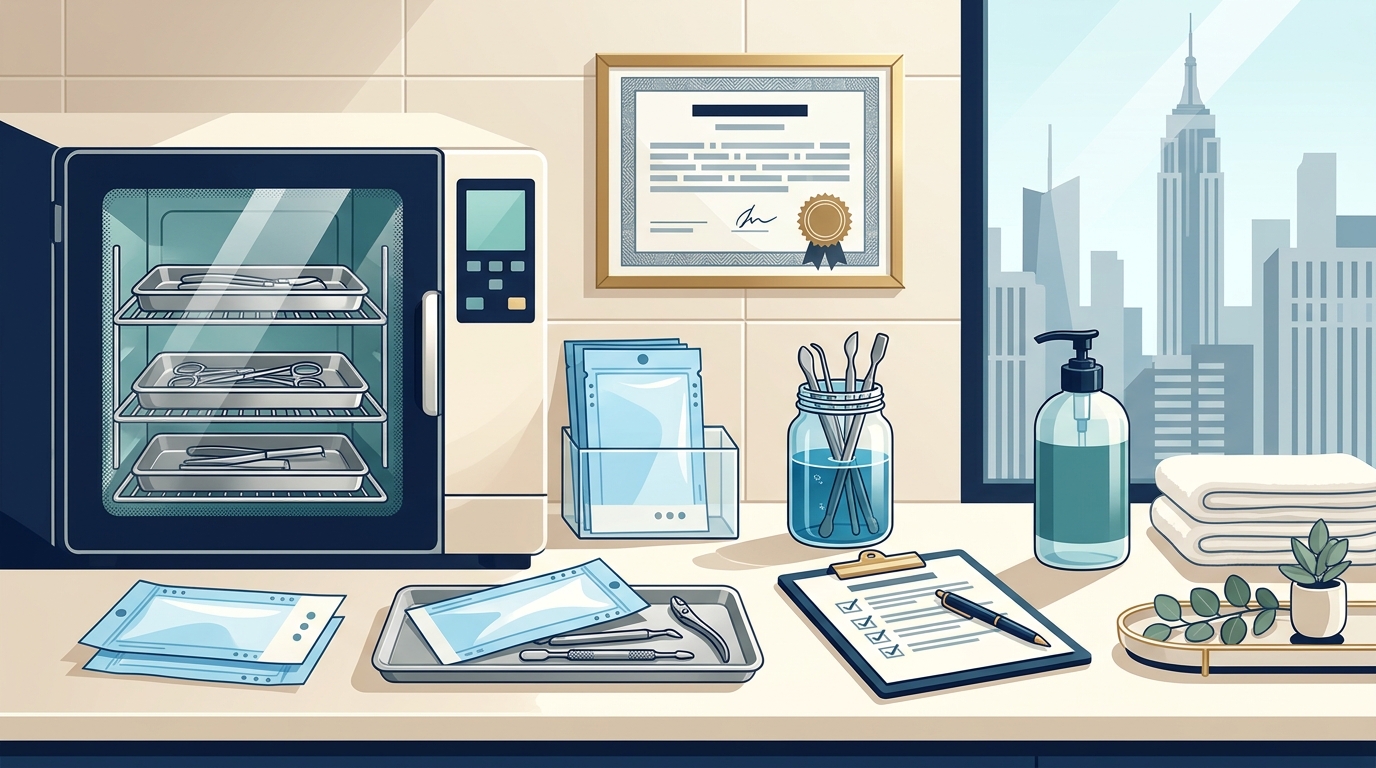
5. Strict Hand Hygiene Standards
Technicians must wash their hands thoroughly before and after every service. Proper handwashing involves using soap and water for at least 20 seconds or using an alcohol-based hand sanitizer with at least 60% alcohol. This simple step is the most effective way to prevent the cross-contamination of pathogens between clients. Consistent hand hygiene is a non-negotiable part of NYC health code compliance.
6. Equipment Segregation and Labeling
Tools must be clearly labeled and segregated by client to prevent mix-ups. Salons often use color-coded bands or labels on instruments to track which client they belong to. This ensures that a tool used on one client is never accidentally used on another without proper sterilization in between. This system adds a layer of safety and accountability to the sterilization process.
7. Visual Inspection Before Use
Every tool must be visually inspected for cleanliness and damage before use. Even after sterilization, tools should be checked for any visible debris, rust, or dullness. Dull or damaged tools can cause micro-tears in the skin, increasing the risk of infection. A professional technician will always inspect their instruments to ensure they are in optimal condition before starting a service.
Choosing the Right Salon
When selecting a nail salon in NYC, prioritize transparency. Ask direct questions about their sterilization methods. A reputable salon will welcome your inquiries and explain their protocols clearly. Lilian and Jane Boutique Spa is committed to open communication and strict adherence to these health standards, ensuring a safe and luxurious experience for every client.
Frequently Asked Questions
Do I need to bring my own nail files?
It is not necessary if the salon follows NYC health codes. Reputable salons provide single-use, disposable files for every client. If a salon reuses files, it is a red flag indicating poor hygiene practices.
What is the difference between disinfection and sterilization?
Disinfection reduces the number of pathogens on a surface to a safe level, while sterilization eliminates all forms of microbial life. Autoclaving is sterilization; using chemical wipes is disinfection. Metal tools that penetrate skin require sterilization.
How often should a salon clean its autoclave?
Autoclaves require regular maintenance and biological testing to ensure they are functioning correctly. Salons should follow the manufacturer's guidelines for cleaning and validation, which typically involves weekly or monthly biological indicator tests.
Can I get an infection from a gel manicure?
Yes, if proper sterilization protocols are not followed. Bacteria or fungi can be transmitted through contaminated tools or surfaces. Choosing a salon that strictly adheres to NYC health codes significantly reduces this risk.
What should I do if I see a dirty tool?
Politely stop the service and ask the technician to replace the tool with a fresh, sterilized one. If the salon cannot provide a clean tool, it is best to leave and report the issue to the NYC Department of Health if necessary. Learn more: Russian gel Manicure HydraFacial.