
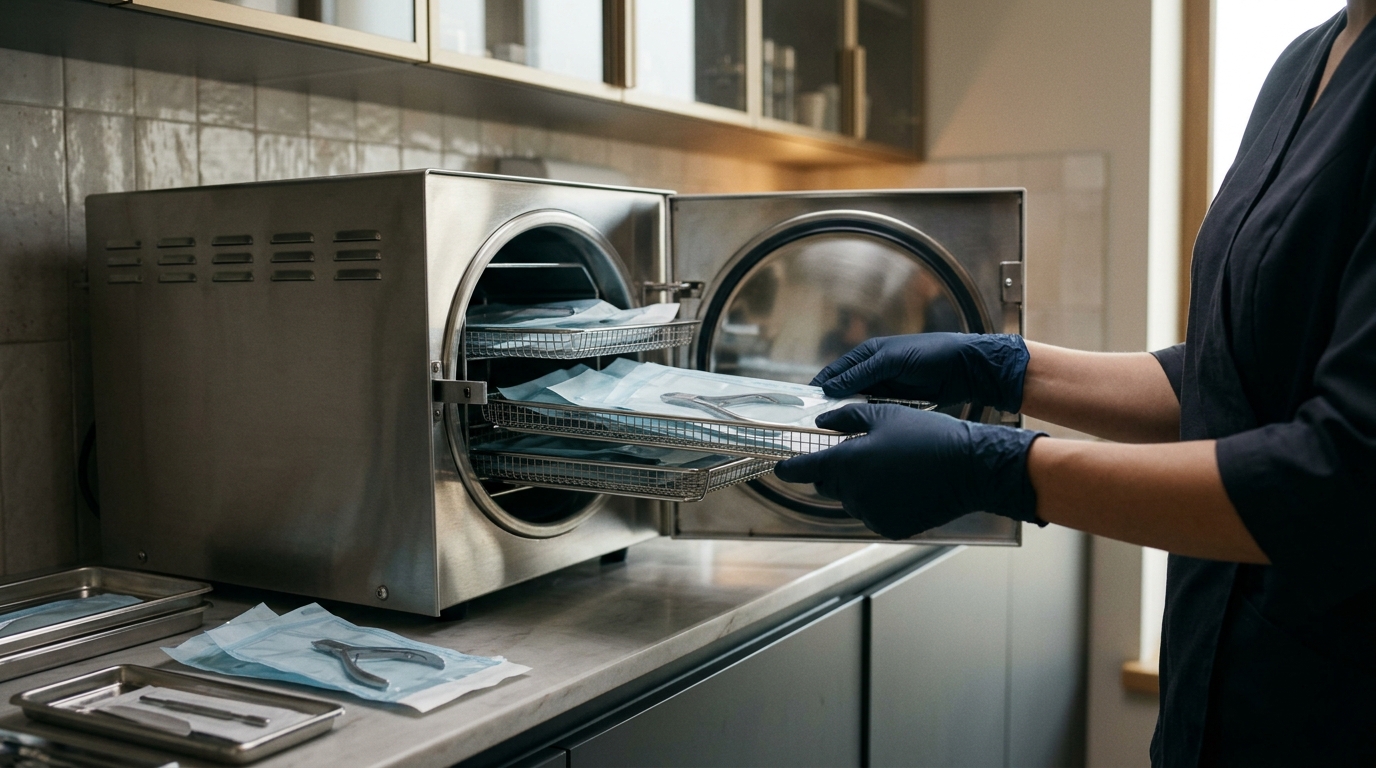
Medical grade autoclave protocols are not merely recommended but are the operational standard for professional Russian gel manicures in New York City. In the Flatiron District, where hygiene and precision define the luxury nail experience, strict adherence to sterilization rules is mandatory. This guide explores the regulatory landscape, the mechanics of autoclave sterilization, and the handling of regulated medical waste. It provides a clear framework for understanding how top-tier salons maintain safety and compliance.
NY Sterilization Rules
New York State enforces rigorous hygiene standards for the beauty industry through the Department of Health (DOH). These regulations are designed to prevent the transmission of bloodborne pathogens and other infectious agents. For nail technicians, compliance is not optional; it is a legal requirement for maintaining a license and operating a salon.
Regulatory Framework
Local Enforcement in NYC
In New York City, local health departments conduct regular inspections to ensure compliance with state standards. The Flatiron District, being a high-traffic area for luxury beauty services, sees consistent oversight. Technicians must be able to demonstrate their sterilization logs and equipment functionality upon request. This level of scrutiny ensures that clients in Manhattan receive services that meet the highest safety benchmarks.
Documentation and Training
Salons are required to maintain detailed logs of sterilization cycles. These logs must record the date, time, and specific items processed. Additionally, technicians must undergo regular training on infection control. This training covers the proper handling of tools, the use of personal protective equipment, and the correct procedures for waste disposal. At Lilian and Jane Boutique Spa, these protocols are embedded in the daily workflow to ensure every client receives a safe and hygienic experience.
Autoclave Sterilization
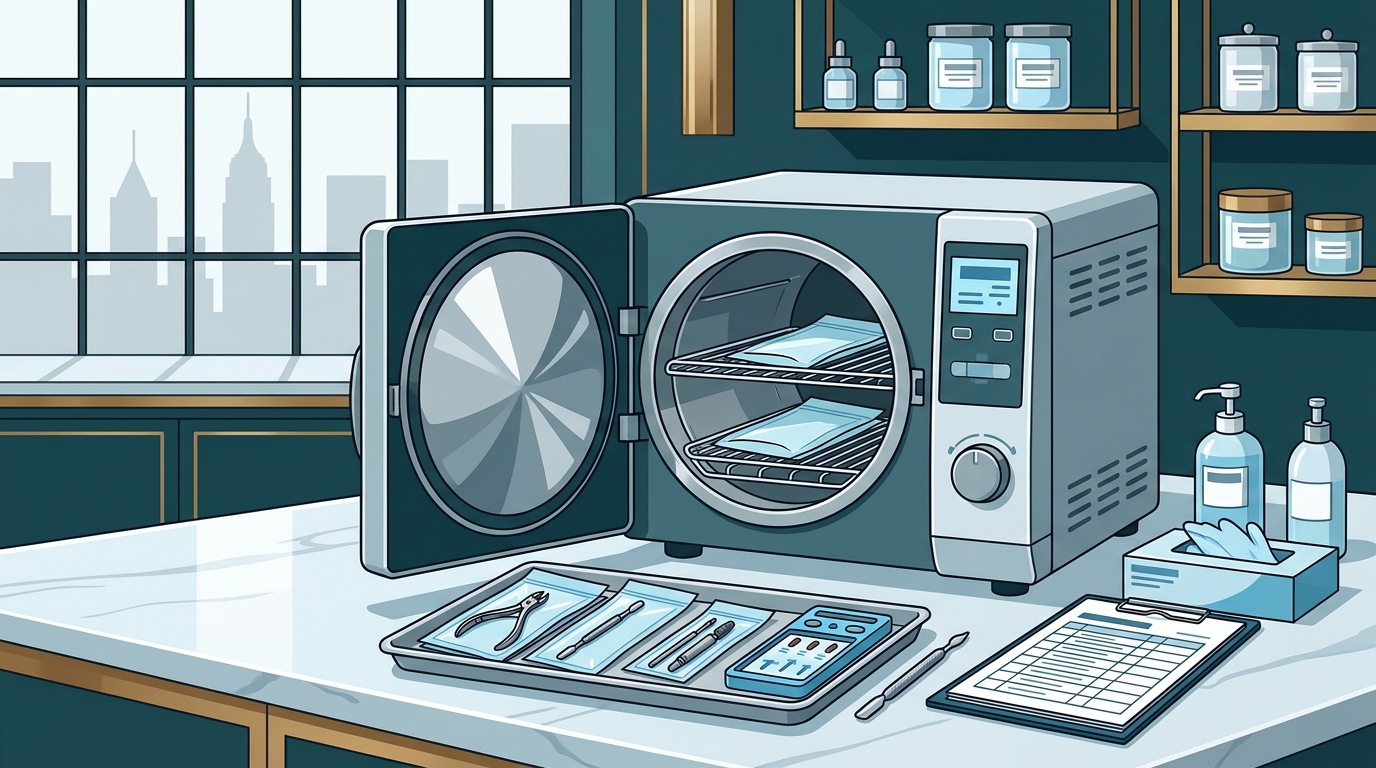
Autoclave sterilization is the process of using high-pressure steam to eliminate all forms of microbial life, including bacteria, viruses, and spores. It is the gold standard for sterilizing reusable metal instruments in the beauty industry. Unlike chemical disinfectants, which may not kill all pathogens, an autoclave provides a verifiable and complete sterilization cycle.
How Autoclaves Work
A medical grade autoclave operates by sealing instruments in a chamber and subjecting them to steam at high temperatures, typically around 134 degrees Celsius. The pressure ensures that the steam penetrates the instruments, reaching all surfaces and crevices. The cycle usually lasts between 15 and 30 minutes, depending on the load and the specific model of the autoclave. After the cycle, the instruments are dried and stored in a sterile environment until use.
Why Autoclaves Are Essential for Russian Gel
Russian gel manicures involve the use of electric files and metal tools that work directly on the cuticle and nail plate. This process can create micro-abrasions, making sterilization critical. Chemical soaking alone is insufficient for these tools because it cannot guarantee the elimination of all pathogens. An autoclave ensures that the tools are free from any biological contaminants, providing a level of safety that is essential for a luxury service. The use of an autoclave is a hallmark of a professional and compliant salon.
Quality Control and Verification
To ensure that the autoclave is functioning correctly, salons use biological indicators or chemical tape. These indicators change color or provide a readout that confirms the sterilization cycle was successful. This verification step is crucial for maintaining trust and compliance. Regular maintenance and calibration of the autoclave are also required to ensure consistent performance. Clients can ask about these verification methods to assess the salon's commitment to hygiene.
| Method | Effectiveness | Applicability to Russian Gel Tools | Regulatory Status in NY |
|---|---|---|---|
| Chemical Disinfection | High for non-critical items | Insufficient for tools contacting blood | Not compliant for critical instruments |
| UV Sterilization | Low to Moderate | Ineffective for metal tools | Not accepted as primary sterilization |
| Autoclave Sterilization | Complete elimination of pathogens | Essential for all metal instruments | Mandatory for critical instruments |
Regulated Medical Waste
Regulated medical waste is any waste material that is contaminated with blood or other potentially infectious materials. In the context of Russian gel manicures, this includes used cotton pads, lint-free wipes, and any materials that have come into contact with blood or tissue. Proper disposal of this waste is a critical component of infection control and regulatory compliance.
Disposal Protocols
Salons must use designated, leak-proof containers for the disposal of regulated medical waste. These containers are typically red or marked with biohazard symbols. The waste must be sealed and removed by a licensed medical waste disposal company. It is illegal to dispose of this waste in regular trash bins. The disposal company will transport the waste to a facility where it is treated or incinerated to ensure it poses no risk to public health.
Compliance and Documentation
Integration with Sterilization
Waste management and sterilization are two sides of the same coin. While sterilization focuses on reusing tools, waste management focuses on safely discarding single-use items. Both processes must be executed with equal rigor. A salon that excels in one but neglects the other is not fully compliant. At Lilian and Jane Boutique Spa, both processes are integrated into a seamless workflow that prioritizes client safety and regulatory adherence.
Key Takeaways
- Medical grade autoclave protocols are the legal standard for sterilizing tools used in Russian gel manicures in New York State.
- Chemical disinfection is insufficient for tools that contact blood or mucous membranes; autoclave sterilization is required.
- New York City health departments conduct regular inspections to ensure compliance with sterilization and waste disposal rules.
- Salons must maintain detailed logs of sterilization cycles and waste disposal for regulatory verification.
- Regulated medical waste must be disposed of in designated containers and removed by licensed disposal companies.
- Clients can ask about sterilization methods and waste disposal practices to assess a salon's commitment to hygiene.
- Proper training and documentation are essential for technicians to maintain compliance and ensure client safety.
Frequently Asked Questions
Is autoclave sterilization mandatory for all nail tools in NYC?
Yes, for tools that come into contact with blood or mucous membranes, such as those used in Russian gel manicures, autoclave sterilization is mandatory. Chemical disinfection is not sufficient for these critical instruments.
How often should autoclave cycles be verified?
Autoclave cycles should be verified with biological indicators or chemical tape for every load. This ensures that the sterilization process was successful and that the instruments are safe for use.
What happens if a salon fails a health inspection?
If a salon fails a health inspection, it may be subject to fines, mandatory corrective actions, or license suspension. In severe cases, the salon may be ordered to close until compliance is achieved.
Can clients see the sterilization logs?
While logs are primarily for regulatory inspection, reputable salons are often transparent about their sterilization practices. Clients can ask to see the logs or ask about the verification methods used.
How is regulated medical waste disposed of?
Regulated medical waste is placed in designated, leak-proof containers and removed by a licensed medical waste disposal company. It is then treated or incinerated at a specialized facility.
Does Lilian and Jane Boutique Spa use autoclave sterilization?
Yes, Lilian and Jane Boutique Spa adheres to strict medical grade autoclave protocols for all reusable instruments, ensuring the highest level of hygiene and safety for its clients.
Conclusion
Medical grade autoclave protocols are the cornerstone of safe and compliant Russian gel manicure services in New York City. By adhering to strict sterilization rules, using autoclaves for all critical instruments, and properly managing regulated medical waste, salons ensure the highest standards of hygiene and client safety. For those seeking a luxury nail experience in the Flatiron District, choosing a salon that prioritizes these protocols is essential. Lilian and Jane Boutique Spa exemplifies this commitment, offering a refined and safe environment for discerning clients. To book your appointment, contact our team. Learn more: Cart Lilian and Jane.